Introduction
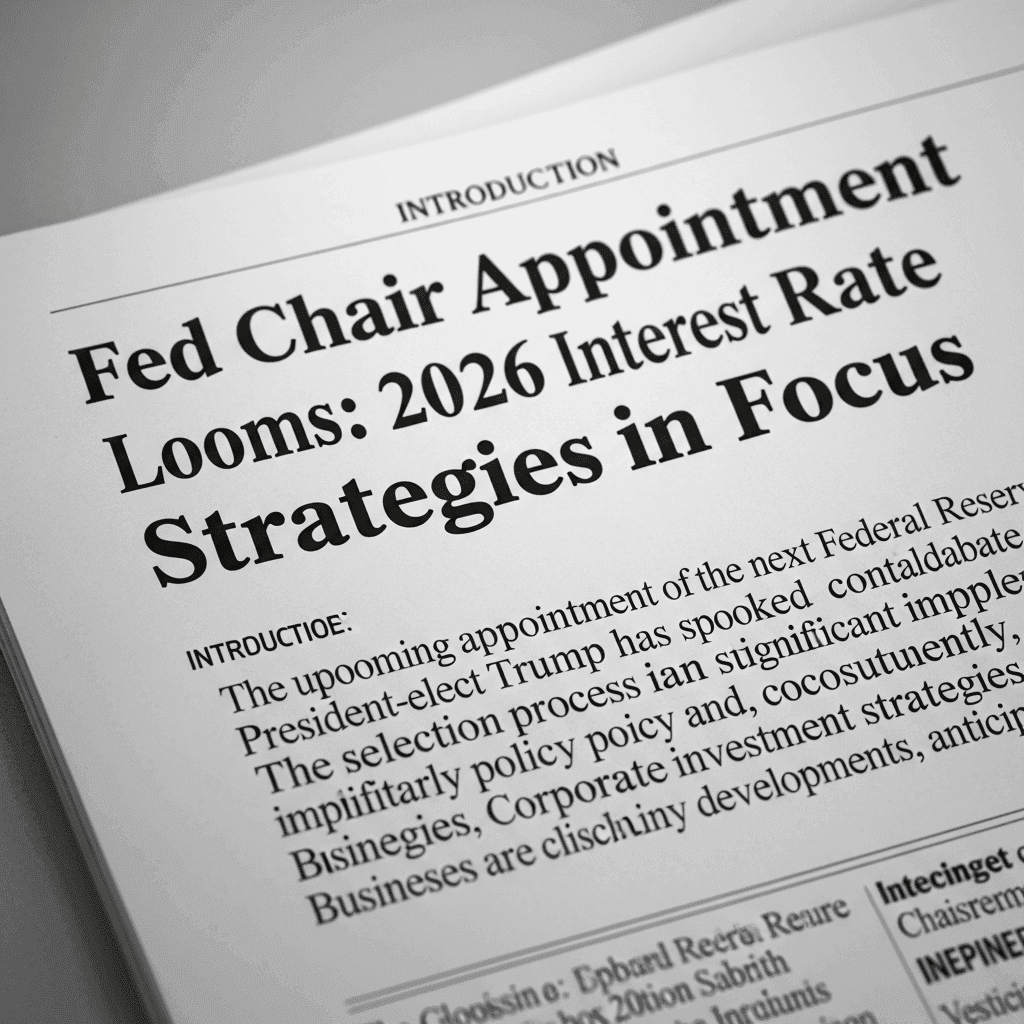
The upcoming appointment of the next Federal Reserve Chair by President-elect Trump has sparked considerable debate. The selection process has significant implications for future monetary policy and, consequently, corporate investment strategies. Businesses are closely watching the developments, anticipating potential shifts in the economic landscape.
Section 1
Chris Waller has emerged as a frontrunner, garnering support from over 80% of top American CEOs. This widespread backing suggests a strong desire for stability and continuity during the transition period. The preference for Waller reflects a perceived need for a steady hand at the helm of the Federal Reserve.
Section 2
The impending decision directly influences how companies are planning their investment strategies for 2026. Interest rate forecasts are crucial for making informed decisions about capital expenditure and expansion. A more hawkish Fed Chair could lead to higher borrowing costs, potentially dampening investment.
Section 3
Conversely, a dovish appointment might signal a continuation of lower interest rates, encouraging greater corporate investment. Companies are actively modeling various scenarios based on the potential candidates and their likely policy stances. These models inform their risk assessments and strategic planning processes.
Section 4
The chosen Fed Chair will inherit a complex economic environment, requiring careful navigation of inflation, employment, and growth. Their approach to these challenges will shape the investment climate for years to come. The ramifications of this decision will reverberate throughout the corporate sector.
Conclusion
The Federal Reserve Chair appointment represents a pivotal moment for the American economy. Businesses are keenly aware of the potential impact on interest rates and investment opportunities. The selection will undoubtedly shape the financial landscape and corporate strategies well into 2026.